How to Choose High-Speed Bearings Custom Service for Your Needs?
Choosing the right "High-Speed Bearings Custom Service" can significantly impact machine performance. These specialized bearings are crucial for industries that demand efficiency and precision. With various options available, selecting the ideal service might feel daunting.
Understanding the specific requirements of your application is essential. Factors such as load capacity, speed ratings, and environmental conditions play a vital role. Not all suppliers offer the same level of expertise, and product quality can vary greatly. Engaging with a knowledgeable provider helps ensure you make informed decisions.
It's also important to reflect on past experiences. Have previous choices met your expectations? Were there issues with your custom bearings that you wish were handled differently? Taking these insights into account can guide you toward a more reliable "High-Speed Bearings Custom Service" in the future.
Understanding the Importance of High-Speed Bearings in Various Applications
High-speed bearings play a crucial role in various industrial applications, impacting efficiency and performance. In sectors like aerospace, automotive, and manufacturing, these bearings reduce friction and enhance machinery longevity.
According to a report by Market Research Future, the global bearing market is projected to reach $81 billion by 2025, indicating the growing significance of high-speed bearings.
Selecting the right high-speed bearing can be challenging. It's essential to consider factors like load capacity, lubrication type, and temperature ranges. Inspecting each component is vital, as a minor miscalculation can lead to premature failure.
To ensure reliability, consult industry standards such as ISO 15144. This provides a framework for bearing selection and application.
Tip: Assess the operating environment before making a choice. High humidity or extreme temperatures can affect bearing performance. It's wise to consult with experts for tailored advice and to ensure you meet your specific operational demands.
Always review the material quality and design to avoid future issues. Your choice today can significantly impact efficiency and costs tomorrow.
Key Factors to Consider When Selecting Custom High-Speed Bearings
Selecting the right high-speed bearings tailored to your needs involves several crucial factors. Bearings should be compatible with the specific requirements of your application. Understanding your operating environment is essential. Temperature, humidity, and load capacity all influence bearing performance.
Material selection plays a significant role. Options include stainless steel, ceramic, and plastic. Each material has unique properties like corrosion resistance and weight. Evaluate these properties against your operational needs.
Tips: Consider seeking professional advice. Their experience can illuminate details you might overlook. Engage with suppliers who specialize in custom solutions. Ask about their design process and quality assurance methods.
Remember, high-speed bearings have strict tolerances. Any deviation can lead to failure. Testing prototypes can reveal potential issues. Reflect on your long-term objectives and how the bearings will fit into them. Adapting your choices based on experience enhances reliability. Be willing to revisit your decisions, even after the selection process.
Materials and Designs: Choosing the Right Specifications for Your Needs
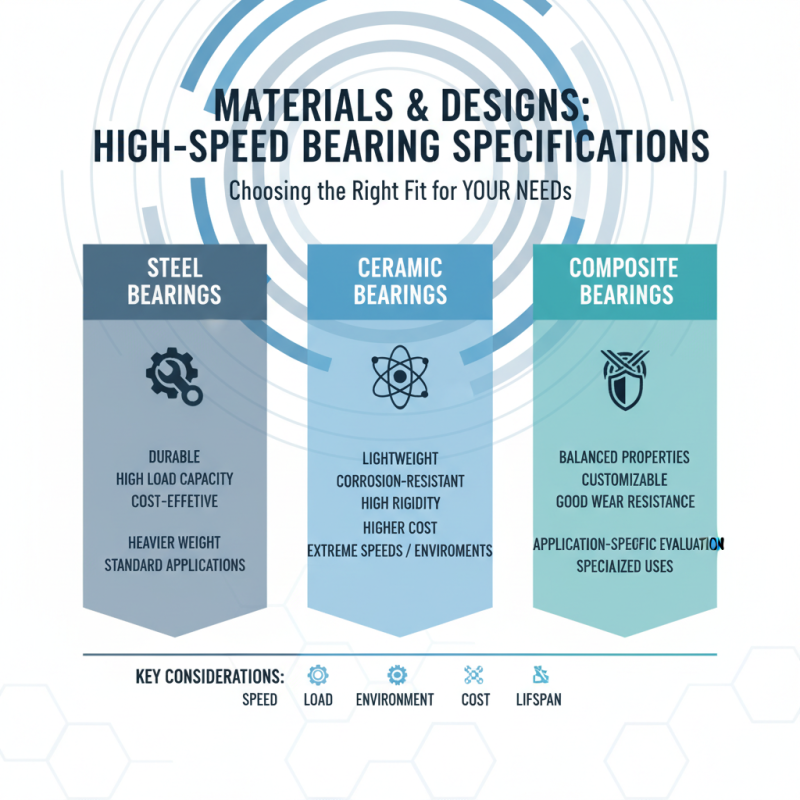
Choosing high-speed bearings involves careful consideration of materials and designs. Different applications require specific specifications. Common materials include steel, ceramic, and composites. Each has unique properties affecting performance. Steel offers durability but may weigh more. Ceramic is lighter and corrosion-resistant, but more expensive. Composites can blend good properties but need evaluation for strength and wear resistance.
Design also plays a crucial role. Bearing types like deep groove or angular contact affect load capacity and speed. The lubricant type impacts friction and heat generation. Choosing the right design requires knowledge of the operating environment. High temperatures or contaminants can influence material selection too.
However, even the best choices may not lead to perfect outcomes. Issues like misalignment can occur and require troubleshooting. Sometimes, a design may not meet initial expectations, prompting further adjustments. Engaging with specialists can provide guidance. Their experience can help refine choices, ensuring the bearings’ performance aligns with your application needs.
Evaluating Performance Standards and Load Capacities for Bearings
When selecting high-speed bearings, performance standards and load capacities play crucial roles. Understanding these factors ensures optimal operation. According to a report by the American Bearing Manufacturers Association, bearing performance is often rated by dynamic load capacity, which indicates the maximum load a bearing can sustain while rotating. This number can vary significantly across different designs.
Load capacities define how much weight a bearing can handle under specific conditions. For instance, deep groove ball bearings typically show capacities from 1,000 to over 100,000 Newtons. Higher capacities often mean better longevity. However, increasing load pertains to trade-offs in speed. Bearings designed for extreme loads may sacrifice rotation efficiency. The challenge lies in meeting both requirements without compromising performance.
Moreover, material selection influences performance standards. Bearings made from ceramic composites often provide enhanced durability and lower friction. These materials can exhibit less wear over time. On the flip side, they might present higher initial costs. This makes careful analysis essential. Consider your unique application requirements before proceeding.
How to Choose High-Speed Bearings Custom Service for Your Needs?
| Bearing Type |
Material |
Max Load Capacity (N) |
Speed Rating (RPM) |
Operating Temperature (°C) |
| Deep Groove Ball Bearing |
Chrome Steel |
3000 |
10000 |
-20 to 120 |
| Angular Contact Bearing |
Ceramic |
5000 |
20000 |
-40 to 130 |
| Needle Roller Bearing |
Stainless Steel |
2000 |
15000 |
-20 to 100 |
| Self-Aligning Ball Bearing |
Brass |
2500 |
12000 |
-30 to 110 |
| Thrust Bearing |
Alloy Steel |
4000 |
8000 |
-20 to 140 |
Working with Manufacturers: The Process of Customizing Bearings for Ultimal Performance
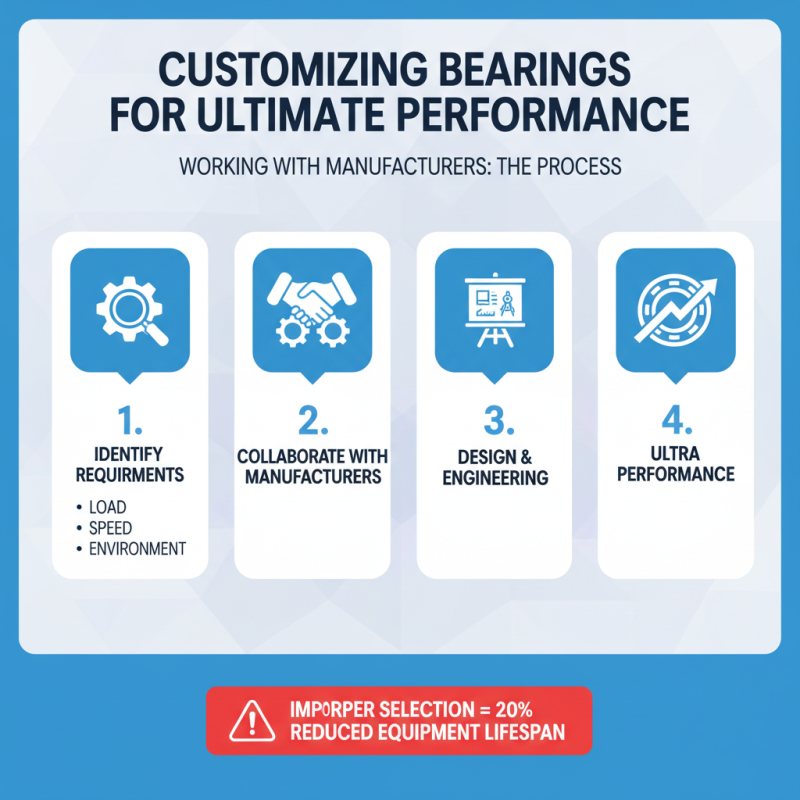
When customizing bearings for optimal performance, collaborating with manufacturers is key. The process begins with identifying specific requirements. Factors like load capacity, speed range, and operational environment must be taken into account. Statistics show that improper bearing selection can lead to a 20% reduction in equipment lifespan. Thus, understanding these variables is crucial.
Communication with manufacturers is essential. They can provide insights based on their experience. For instance, high-speed applications often require specialized materials. Reports suggest that ceramics can enhance durability by 30% compared to standard steel. Yet, not every application benefits from these advanced materials, so evaluating individual needs is necessary.
Prototyping is another step in this customization process. It allows for testing under real-world conditions. Feedback from these trials can pinpoint adjustments needed before mass production. However, the prototyping phase can sometimes lead to unexpected challenges. Manufacturers may face production delays or design flaws that require further tweaking. Working closely with them can mitigate these issues, ensuring that the final product meets all operational expectations. By focusing on communication and feedback, companies can better customize bearings to fit their unique demands.