How to Choose the Best Wind Turbine Bearings Provider?
When selecting a Wind Turbine Bearings Provider, expertise and reliability are key. According to Sarah Thompson, a noted engineer in renewable energy, "Choosing the right bearings can make or break the efficiency of wind turbines." Her insight reflects the critical role bearings play in turbine performance.
The wind energy sector demands high precision and durability in components. Bearings experience significant stress from weather and mechanical load. This makes it essential to partner with a provider that understands these challenges. Not every provider guarantees the same quality. Ensuring longevity and efficiency in wind turbines starts with choosing a reliable bearings provider.
Many companies claim to offer comprehensive solutions. However, not all possess the track record needed to inspire confidence. Evaluate their past work and seek recommendations from industry peers. The right Wind Turbine Bearings Provider should have an established reputation built on innovation and customer service. Carefully considering these factors can lead to better operational outcomes and reduce potential risks.

Understanding the Importance of High-Quality Bearings in Wind Turbines
High-quality bearings play a pivotal role in the efficiency and longevity of wind turbines. These components bear significant loads and face harsh environmental conditions. Their reliability is crucial for turbine performance. When selecting bearings, consider factors like load capacity, material quality, and environmental resistance. Poor-quality bearings can lead to failures, resulting in costly downtime and repairs.
Understanding the nuances of bearing design is essential. The right bearings can reduce friction and improve energy efficiency. They also help in maintaining smooth operation, even under extreme weather conditions. However, sourcing the best bearings is not as straightforward as it seems. Many manufacturers claim excellence, yet not all deliver.
Each decision impacts turbine performance. It’s vital to analyze manufacturers based on industry feedback and track records. Reliable providers should have proven expertise in the field. They must demonstrate a commitment to quality. Ultimately, investing in superior bearings pays off. Balancing cost with quality will lead to the best results.
Key Factors to Evaluate When Selecting a Wind Turbine Bearings Provider
When selecting a wind turbine bearings provider, several key factors come into play. The reliability of the bearings is paramount. A study by the National Renewable Energy Laboratory found that nearly 25% of all wind turbine failures stem from bearing issues. Choosing a provider with a track record of producing high-quality, durable bearings can significantly reduce downtime.
Another important criterion is the provider's expertise in wind energy applications. Companies specializing in this sector often have advanced knowledge of the specific stresses and demands wind turbine components face. A report by the Global Wind Energy Council noted that up to 80% of operational costs are linked to maintenance. Therefore, selecting a provider who understands these dynamics is crucial for long-term efficiency.
Customer support and service are additional essential factors to consider. Maintenance and replacement parts must be readily available. Research shows that turbines with proactive support schedules have a 30% lower total cost of ownership. Ensure that your chosen provider can offer adequate post-purchase support. Failing to do this may lead to unforeseen costs and operational inefficiencies. Opt for transparency and proactive communication to mitigate potential risks.
Industry Standards and Certifications for Wind Turbine Bearings
When selecting bearings for wind turbines, understanding industry standards and certifications is crucial. ISO 9001 is a key certification that ensures manufacturers meet international quality management benchmarks. Bearings that comply with this standard are likely to be more reliable and durable.
Another critical certification is the ISO 281 for rolling bearings. This standard provides guidelines for bearing life calculation, ensuring that the bearings can withstand operational stresses. Research indicates that bearings meeting these standards can extend turbine lifespan by 20% to 30%. This can significantly reduce maintenance costs over time.
Tip: Always request documentation of certifications from prospective suppliers. Verify that the products align with your project needs. It's vital to assess the supplier’s track record and customer feedback. Be cautious of overly optimistic claims about durability or performance; not all promises are backed by data. Also, consider the real-world application; not every product that meets a standard will perform optimally in your specific environment.
Comparative Analysis of Leading Wind Turbine Bearings Manufacturers
When evaluating the leading manufacturers of wind turbine bearings, several factors come into play. Expertise in material selection is crucial for durability. The right materials can withstand harsh environmental conditions. Pay attention to the manufacturing process as well. An efficient, precise method ensures high-quality products.
Reliability is a key factor as well. Some manufacturers may lack consistent performance. It's essential to analyze feedback from industry professionals. Only insights from experienced users will guide your choice. Ensure that your chosen provider can adapt to evolving technology. Innovation is vital in this fast-paced industry.
Another aspect to consider is compliance with international standards. This affects product quality and safety. However, not all manufacturers maintain rigorous quality checks. Investigate the certifications they hold. It's crucial to assess their reputation in the market. Transparency in operations is also significant. A provider open about their processes often indicates reliability.
Evaluating Cost vs. Performance: Strategies for Choosing Bearings Providers
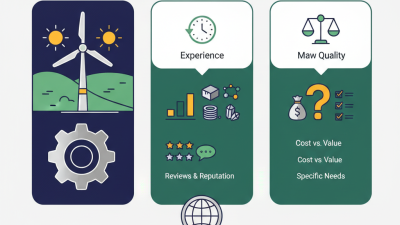
When choosing a wind turbine bearings provider, it's essential to evaluate both cost and performance. Price often stands out. However, the cheapest option isn't always the best. Quality issues can arise, leading to more significant costs later. You could end up with increased downtime and maintenance expenses. A balance between initial investment and long-term reliability is crucial.
Performance should not be overlooked. High-quality bearings can enhance turbine efficiency and lifespan. Consider the materials used and manufacturing processes. Talk to industry experts if you're unsure about specifics. Their insights can clarify which features to prioritize. While it might seem tempting to go for lower costs, investing in quality pays off.
Reflect on your specific needs. A provider's experience in the wind energy sector adds value. It's not just about the product but their understanding of turbine dynamics. Some providers may excel in performance but lack competitive pricing. Others may offer great deals but fail in reliability. An ideal choice meets both metrics effectively.
How to Choose the Best Wind Turbine Bearings Provider? - Evaluating Cost vs. Performance
| Provider Type |
Cost (per unit) |
Durability (hours) |
Load Capacity (kN) |
Performance Rating (1-10) |
| Standard Provider |
$150 |
5000 |
50 |
7 |
| Premium Provider |
$250 |
8000 |
60 |
9 |
| Economy Provider |
$100 |
3000 |
40 |
5 |
| Specialty Provider |
$300 |
10000 |
70 |
10 |